Free Cybersecurity Materials for Schools: Presentation for Teachers
12 / 10 / 26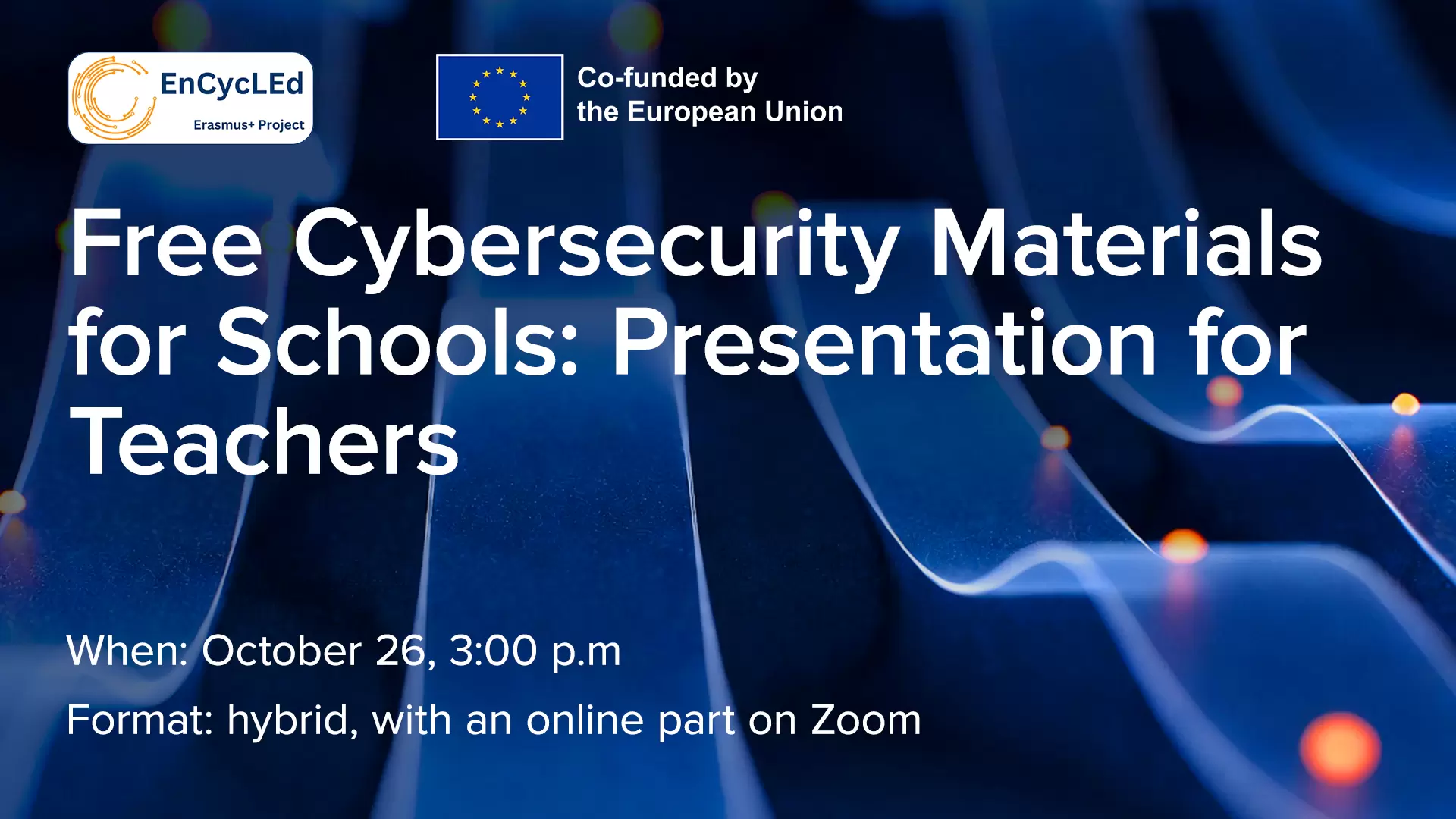
The meeting will also cover why cybersecurity and cyber hygiene skills should be built from school age. Teachers will get a walkthrough of the learning platform and ready-to-use lesson materials, and experts will share hands-on experience of bringing them into the classroom.
The meeting runs from 3:00 to 5:00 p.m. in a hybrid format, with the online part on Zoom. Registration is open until October 19.
What is EnCycLEd
EnCycLEd is an Erasmus+ project that builds digital readiness and resilience in educational institutions through cybersecurity education and career guidance in the field. The materials target two age groups: 10–14 and 15–18. Teachers can use them beyond computer science classes, in other subjects, electives, and extracurricular activities.
The resources have already been tested in class. Around 15 teachers and more than 500 students at partner institutions in Greece and Ukraine took part in the pilot. It confirmed that the materials are relevant, clear, and easy to use, and feedback from teachers and students helped refine them.
What’s on the EnCycLEd platform
The go.encycled.eu platform offers:
- 5 learning modules with ready-to-use lesson materials
- a searchable repository of cybersecurity resources
- interactive learning materials and a glossary
- a guide to career and education paths in cybersecurity
- a safe discussion room
The project has also produced a piloting guide for teachers and educational institutions, plus tools to assess learning outcomes and digital readiness.
How to join
To attend the presentation, fill out the registration form by October 19, 2026. Registered participants will receive a link to the online meeting and the materials.
You can explore the resources in advance at go.encycled.eu. More about the project: www.encycled.eu.
The EnCycLEd Erasmus+ project (grant agreement No. 2023-1-AT01-KA220-SCH-000166888) is co-funded by the European Union. Views and opinions expressed are however those of the author(s) only and do not necessarily reflect those of the European Union or the European Education and Culture Executive Agency (EACEA). Neither the European Union nor EACEA can be held responsible for them.
Subscribe to our newsletter